A prong setting makes an opal look as if it is floating. A bezel setting makes it look as if it has always been there. Both can be beautiful, and either can be the wrong choice for the way you actually live. With opal, that choice carries more weight than it does with most stones, because opal is soft, often cut thin at the edge, and unforgiving of the small accidents that ordinary days produce. What follows is a straight comparison of the two styles on the points that will still matter in ten years: how the metal holds the stone, how exposed the opal is, how each setting changes its appearance, and what maintenance each one quietly asks of you.
How the Two Settings Actually Hold an Opal
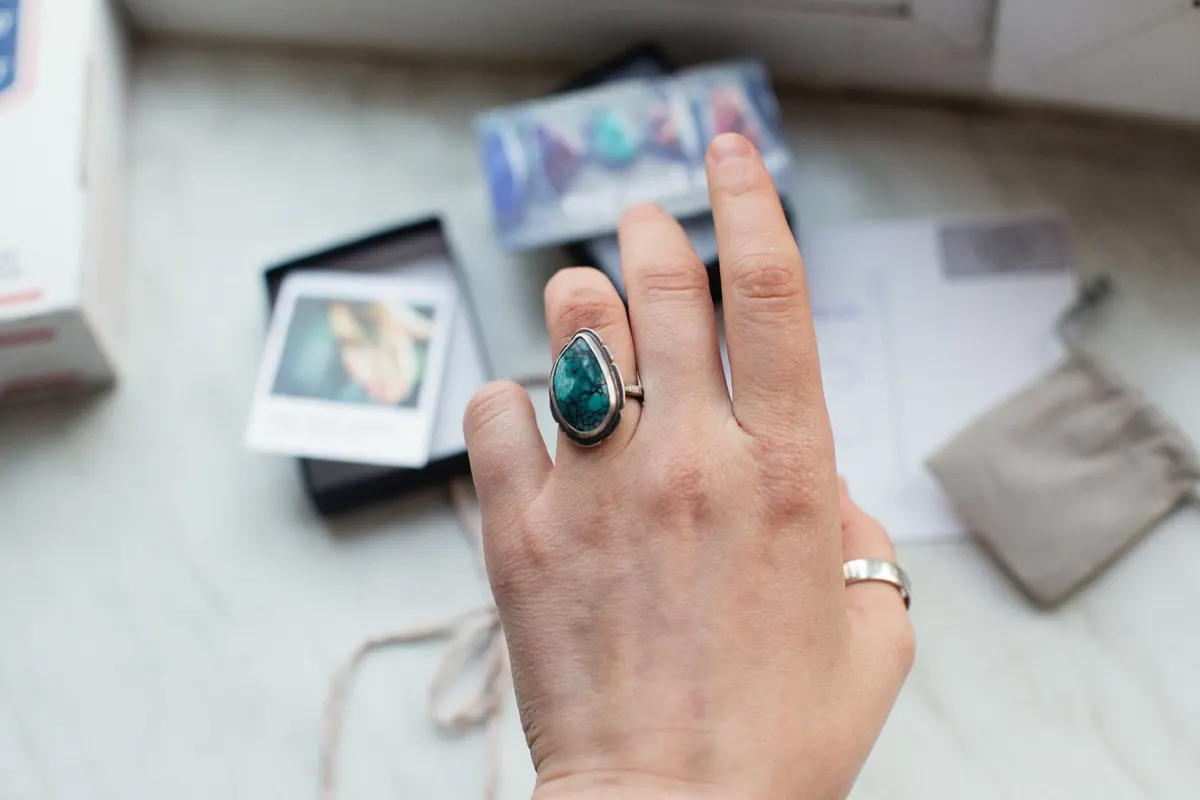
A bezel is a continuous rim of metal drawn up around the outside of the stone and then rubbed or pushed inward over the girdle, the widest edge of the cut. Most opals are cut as cabochons: a domed top, a flat or slightly curved base, and a thin rim at the edge where the two meet. That rim is the most vulnerable part of the stone. A bezel covers it completely, so the opal is held by metal rather than by pressure points.
A prong setting works the other way around. The stone rests on a seat, and four or six metal claws rise up and fold over the crown near the edge. The opal is held at those few contact points, and everything between them, girdle included, sits exposed above the metal.
One practical difference worth knowing before you shop: bezels must fit the stone closely. A bezel is built around a specific opal, so if you later want a different stone in the same ring, the setting usually has to be remade or heavily altered. Prong settings are more forgiving, which is why they are the standard choice for unusual freeform cuts.
Protection: Where the Bezel Pulls Ahead
Think about the accidents that actually damage rings. A hand swung into a door frame. A ring caught on a car door, a shopping bag handle, a coat sleeve. A stone knocked against a tiled floor or a kitchen worktop. In a prong setting, that impact lands on the opal's exposed edge or snaps a prong tip, and the stone can chip or loosen in the same moment. In a bezel, the metal takes the hit first and spreads it around the rim. The opal sits recessed, with less of it standing proud of the ring.
There is a second, quieter benefit. Bezel-set rings do not snag. No claws catch in knitwear, hair, or the lining of a pocket. For anyone who wears a ring from morning to night, that alone can decide the question.
Prongs are not reckless, of course. A well-made four-prong setting with sturdy tips and a properly cut seat is secure. The point is that it offers less margin. The stone does more of the work of absorbing the world.
Appearance: What Each Setting Does to the Opal
Prongs show more stone. With minimal metal around the edge, the opal reads larger, and light can reach the sides as well as the face, which flatters the play of colour, especially in crystal and other translucent opals. Four prongs leave more of the stone visible than six, though six spread the load more evenly.
Bezels frame. A well-cut bezel gives an opal a calm, finished look, and a fine rim of yellow or rose gold can warm the stone in a way that a thin claw never does. The trade-off is at the edge: a solid bezel blocks side light, and on a very translucent opal it can dull the colour slightly. An open-backed bezel, or a bezel with small openings at the sides, solves most of that. On white opal, black opal and boulder opal, whose colour comes from the face rather than light passing through, the difference is usually small.
If you want the stone to be the only event, choose prongs. If you want the ring to look like one object rather than a stone balanced on metal, choose a bezel.
Matching the Setting to Your Week
Setting choice gets much easier when you describe your ordinary week rather than your ideal one.
- Desk work, ring worn daily: a bezel, set low, is the least demanding option over years of typing, doors and car keys.
- Hands-on work or hobbies: gardening, lifting, gym sessions, small children. Bezel if you must wear it; better still, take the ring off for those hours.
- Occasional evening wear: prongs are perfectly reasonable, and they will show the opal at its most brilliant.
- A large or high-domed opal: keep the profile low. A tall dome on claws is the classic way to lose a corner to a door frame.
- An inherited or irreplaceable stone: bezel. You are protecting something you cannot buy again.
- An opal doublet or triplet: ask the jeweller specifically how the setting treats the layered edge, since these stones are built from bonded layers and deserve gentler handling.
- A stone you may reset later: prongs make the swap simpler.
Long-Term Maintenance: Different Habits, Different Bills
Living with prongs
Claws wear. Daily contact with desks, seat belts and kitchen surfaces gradually thins the tips, and a thin tip is a stone waiting to drop. Have the setting checked by a jeweller roughly once a year, or every six months if the ring is worn constantly. Between checks, watch for three signals: the ring snagging on fabric, the opal rotating or rocking in its seat, and a visible gap between a claw tip and the stone. If the stone moves at all, stop wearing the ring until it is tightened. Retipping worn claws is a small, routine repair; replacing a chipped opal is not.
Living with a bezel
A bezel needs less attention, but it is not maintenance-free. The rim can wear thin at its top edge, collect dirt along the seam, and distort after a hard knock. Have it inspected yearly all the same. If the stone rattles or the rim looks pushed to one side, take it to a jeweller rather than experimenting with pliers; a bezel is tightened with a burnisher by someone who knows how much pressure the stone will tolerate.
Cleaning both, safely
Opal dislikes heat, sudden temperature change, chemicals and long soaking. Clean either setting with lukewarm water, a drop of mild soap and a soft brush, then pat dry with a lint-free cloth. Skip ultrasonic and steam cleaners. Keep doublets and triplets out of water for any length of time, since moisture can affect the bond between layers. A soft brush or a wooden toothpick clears dust from a bezel rim; a brush passed gently under the stone clears lint from between prongs, where it otherwise collects unseen. Store the ring in its own pouch, away from diamonds, sapphires and quartz, all of which will scratch opal with ease.
A Practical Shortcut
If you are undecided, default to a low bezel with a slim rim and, if the opal is translucent, an open back. It gives you the protective advantage without hiding the stone, and it will ask the least of you over the years. Choose prongs when the ring is for occasional wear, when the opal has an irregular shape that a bezel would have to swallow, or when maximum visible colour matters more than armour.
Whichever you choose, have the finished ring checked by the jeweller before you leave the workshop, and ask them to show you how the stone sits in its setting. Knowing what "correct" looks like is the best maintenance tool you can carry home. A ring you understand is a ring you keep intact.
Photo: Alexey Demidov / Pexels